

Are you leading your team or just following the daily routine? In the fast-paced business world of today, there is a significant distinction between these two behaviours. Both are important, but the transition you can take from manager to leader can change the path of your career and make all the difference to your team’s success.
It has been well researched and documented that people tend to leave ‘bad’ managers not jobs. So let’s look at six tell-tale signs that it could be time for you to make this critical transition.
1. You are focused on Day-to-Day Tasks, Not Big Picture Thinking
As a manager, you can easily get lost in the day to day. You’re likely excellent at scheduling tasks, hitting deadlines, and generally keeping the gears turning. But here’s the twist: Leaders look further than the immediate horizon.
Leaders are always asking where the team is going, not just where it is today. They are charting the course for the future, thinking about how decisions being made now will affect longer-term objectives.
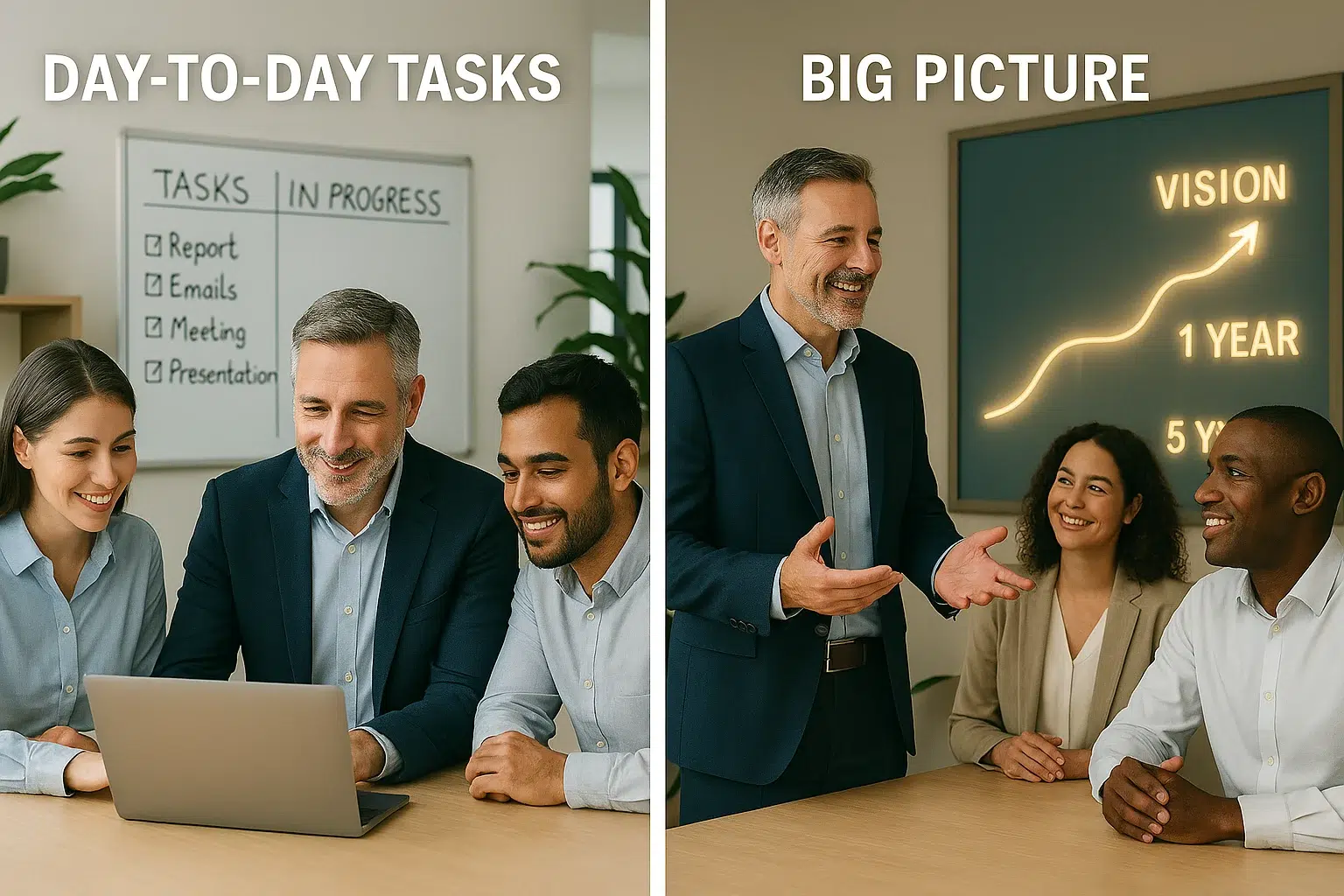
Actionable Tip: Take a little time each week to reflect on your team’s long-term goals. The first question should be, “Where should we be in six months? A year? Five years?” This easy practice will help you zoom out from daily operations to overall strategy.
2. You Prioritise Efficiency Over People
In fact, it is what most managers are orientated towards — they want to get things done fast and efficiently. And while that matters, leaders know that the members of their team are their greatest resource.
Good leaders know they build relationships, and that every person on the team has varying strengths and weaknesses, and that they need to help each other grow and develop. It should be a scenario where people feel appreciated and are inspired to work to the best of their abilities. Great leaders also spend time ensuring that their team comprises of the best people they can find – not just the people who can churn out the deliverables.
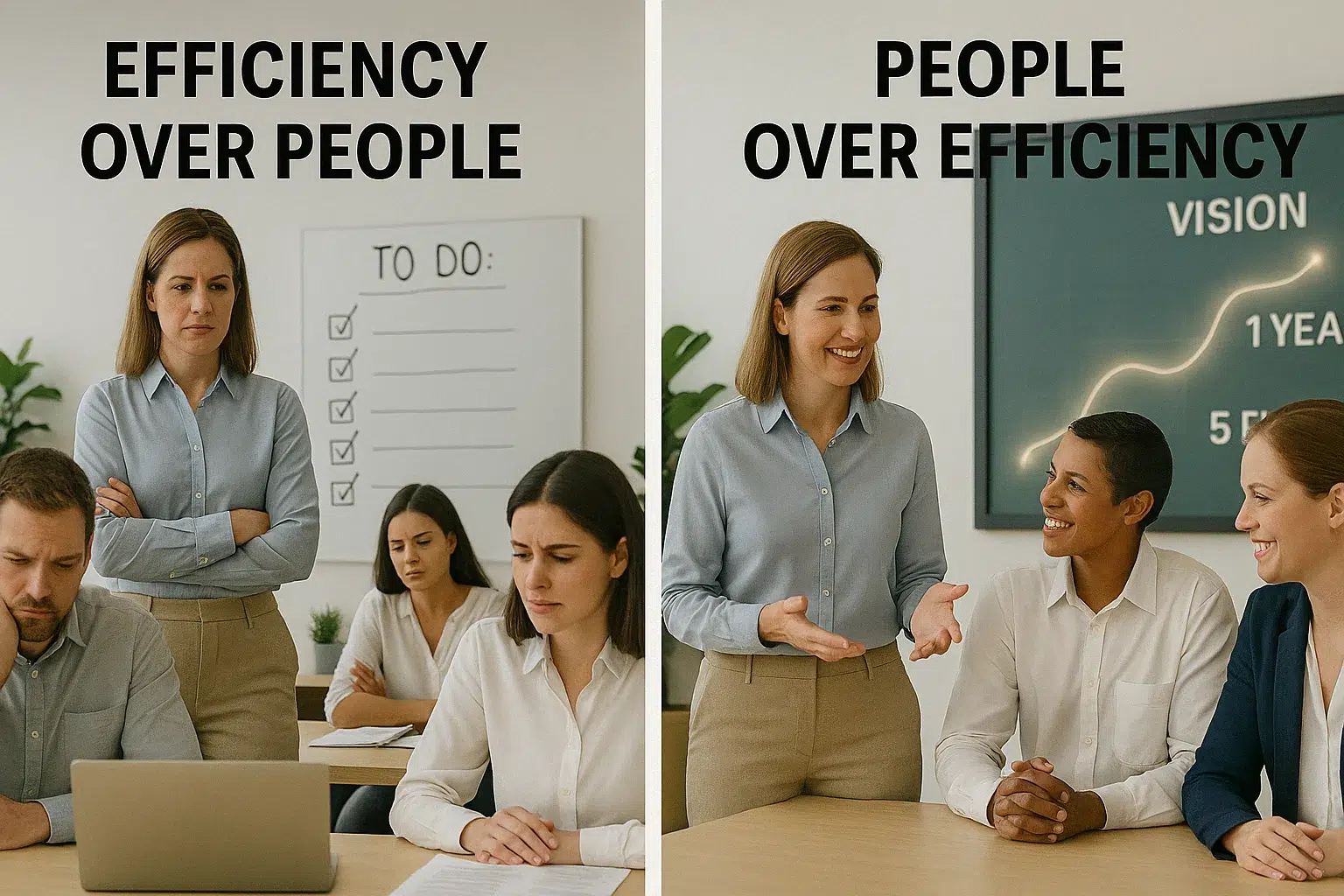
Actionable Tip: Set the time aside for regular one-on-one conversations with your team members. Ask about their ambitions, the challenges they face, and how you can help them succeed. So, expect to see more productivity and efficiencies in your teams with this investment in your people.
3. You’re Dependent on Hierarchical Structures
Some managers still lean on traditional top-down structures to accomplish mission objectives. They may tell themselves: “I’m the boss, so people should do what I tell them.” Leaders, however, understand that the strongest ideas can come from anywhere in the organisation. “While hierarchy may make some managers feel powerful and in control, the data suggests it’s actively undermining team unity and effectiveness.”
Good leadership means collaborating, fostering teamwork, and building an environment where everyone is comfortable to speak what’s in their hearts and minds.

Actionable Tip: Create a “no-rank” brainstorming session surrounding the problem, where all ideas are treated as equal. You might be surprised at the out-of-the-box thinking that occurs when people feel free to weigh in without the threat of hierarchy.
4. You lead by Authority, Not by Influence
Managers frequently, with their power, reinforce rules and get things done. They could say, “Do this because I’m your boss.” Leaders, by contrast, inspire and motivate their teams. There are some that lead by example, build trust and respect.
When you lead by influence, people follow you when they want to, not because they have to. All of which allows for a more positive and productive work environment.

Actionable Tip: The next time you need a task to be done, explain the why! Share your vision and how this task contributes to the greater objective. When individuals know the observations that guide their work they tend to be engaged and motivated in their work.
🚀 Learn how to lead with influence and impact—see our Strategic Leadership Training Courses
5. You’re Resistant to Feedback
Feedback may come across to managers as a challenge to their authority or a demonstration of weakness. Leaders have a different relationship with feedback; they see it as a learning opportunity and a path to growth.
This makes your team feel like you’re committed to being better every single day by being open to something that isn’t working. It also builds an environment in which people feel safe to speak up about their ideas and their fears.

Actionable Tip: When you’re next in a meeting with the team, request feedback on a topic. You might respond with: “I’m focusing on my leadership skills. What is one thing you think I could do better?” Do remember to listen without being defensive and thank people for their honesty.
6. You Keep Decision-Making to Yourself
Some managers frequently make decisions alone, believing that it’s quicker or signals strength. But a leader that involves others in decision-making not only creates buy-in but also garners better results.
One way to increase your likelihood of success is to include your team in the process. That’s because people are more likely to buy into decisions that they had a part in making.

Actionable Tip: For your next major decision, use this technique: Share the problem with your team, solicit their input, and guide the conversation. Your decision will be guided by your team’s collective wisdom, but you will still have the final say.
FAQs
Q1: How do I know if I’m managing vs. leading?
Examine how you spend your time and energy. Are you spending your time focusing on the tasks and processes you manage, or are you spending your time developing your team and planning for the future? People and long-term strategies come first to true leaders.
Q2: How do I evolve my leadership style?
The first step is becoming more conscious of what you currently do. Then work to make your approach more big-picture, improve the way you solicit feedback and move from giving just direction to inspiring and empowering your team.
Q3: In what ways do leadership courses help me grow as a leader?
Another way to develop your leadership abilities is to take a leadership course that offers fresh insight, teaches you useful skills and allows you time to think about how you lead. So you can learn from other people’s experiences and keep up with best practices around leadership.
Discover our Leadership and Management Courses

If you are looking for leadership courses, be sure to remember LCT International, our various programmes tailored to help you become more than just a manager, but a leader as well. Out Upskilled courses are designed to reflect what modern leaders need, ensuring you take away practical skills that you can implement right away in your place of work. If you want to develop your strategic competence, or to master the capacity to inspire and excite others — LCT International has that course for you.
🔍 Browse our full suite of leadership and management programme to find the one that suits your goals!